
BLOG
Acute Behavioral Health Stabilization Support Reduced Reported ED Utilization by 83%

Behavioral health leaders face a difficult reality: patients do not remain at the same level of acuity throughout treatment.
Symptoms can worsen suddenly, creating periods when routine outpatient care may no longer be sufficient, but hospitalization may not be clinically necessary. Yet these moments often trigger a referral to another provider, program, or level of care. Patients may be directed to an emergency department, psychiatric hospital, partial hospitalization program (PHP), intensive outpatient program (IOP), or another organization capable of delivering more intensive services. While these transitions are often appropriate, they can also create fragmentation precisely when continuity matters most.
What if there was another option?
Array Behavioral Care examined outcomes from 104 patients who experienced significant clinical deterioration while already engaged in outpatient care and received temporary treatment intensification through a specialized acute stabilization pathway between November 2024 and July 2026.
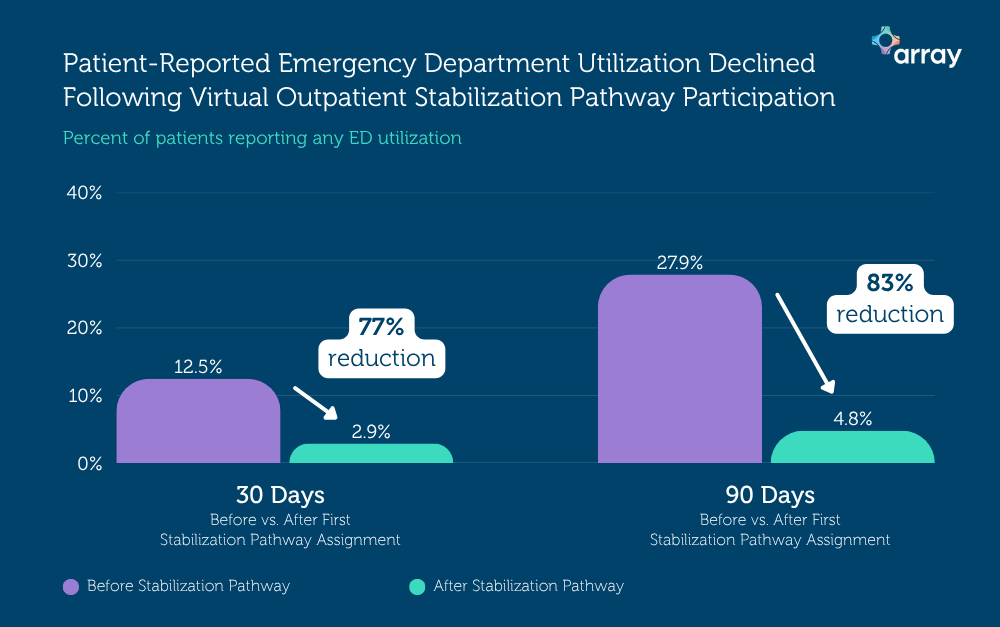
Following participation, the percentage of patients reporting past 90-day emergency department utilization fell from 27.9% to 4.8%. Patients also demonstrated meaningful improvement in depression and anxiety symptoms, and most ultimately transitioned back to lower-acuity outpatient care.
The findings suggest a different way of thinking about acute behavioral health needs. Rather than waiting until deterioration results in a crisis, referral, or emergency department visit, outpatient programs may be able to use ongoing measurement, risk monitoring, and acuity-aligned care pathways to identify worsening symptoms earlier and respond with the right level of support at the right time, while preserving continuity with the clinicians and therapeutic relationships patients already know and trust.
A Missing Layer in the Behavioral Health Continuum
Behavioral health acuity is often dynamic. Longitudinal research suggests that depression and anxiety frequently follow episodic and fluctuating trajectories, with periods of significant symptom worsening occurring alongside periods of stabilization and recovery.1,2 Many episodes of deterioration may reflect acute exacerbations that require temporary intensification of support during a period of heightened risk rather than a permanently different clinical state.
Because most specialty behavioral healthcare is delivered in outpatient settings, the ability to respond effectively when patients deteriorate has important implications for both patient outcomes and healthcare utilization. Traditionally, acute deterioration results in referral to another provider capable of delivering more intensive services.
These transitions can be clinically appropriate. But they can also create fragmentation at precisely the moments when continuity matters most. Patients may suddenly need to navigate a new organization, new clinicians, repeated assessments, unfamiliar treatment plans, and delays in accessing care.3 During periods of heightened vulnerability, every handoff creates opportunities for disengagement, delayed treatment, and further clinical worsening.4
A Different Approach to Acute Deterioration
Within Array’s virtual outpatient practice, patients are assigned to acuity-aligned care pathways. Array’s care pathways provide a structured, evidence-informed framework for matching patients to care based on their symptoms, safety risk, functioning, treatment history, and broader clinical context. Each pathway offers recommended best practices to guide treatment planning and service delivery, while preserving clinical judgment and allowing care to be adjusted as patients’ needs change. Using principles of measurement-based care, care pathways provide a dynamic framework for adapting treatment planning, service delivery, and clinical support as patients improve, destabilize, or enter periods of sustained recovery.
One care pathway, the stabilization pathway, was developed specifically to address a largely overlooked space in behavioral healthcare: the period of acute deterioration when patients require more support than traditional outpatient care can provide but may not need or be able to access hospitalization.
Designed for patients experiencing escalating symptoms, increased suicide risk, self-harm, or significant functional decline, the pathway delivers temporary treatment intensification within the outpatient setting while minimizing disruption to the therapeutic relationships and continuity of care patients already have in place.
The underlying premise is straightforward. Because many periods of psychiatric deterioration are acute and potentially responsive to timely intervention, the first response should not always be a referral to a higher level of care. For some patients, a temporary increase in support can provide an opportunity to stabilize symptoms while preserving continuity with the clinicians and treatment relationships that already know them best.
Depending on clinical need, support may include:
- More frequent therapy visits
- Medication-management visits
- Structured symptom monitoring
- Suicide-risk monitoring
- Medication adjustment
- Safety planning
- Care coordination
- Collaboration with external services when appropriate
When clinically appropriate, this approach may help patients receive the support they need without unnecessary transitions to emergency departments, hospitalization, or other higher-acuity settings. By helping patients stabilize within an outpatient setting when safe and appropriate, organizations may be able to preserve continuity, reduce avoidable utilization, and support a more efficient use of behavioral health resources. This is not a replacement for higher levels of care when they are needed. It is an additional option for responding to deterioration earlier.
Evaluating the Population and Outcomes
To better understand the population served by the specialized acute stabilization pathway and its impact on clinical, safety, and healthcare utilization outcomes, Array examined data from 104 patients who were initially assigned to lower-acuity outpatient care pathways but later experienced clinical deterioration requiring acute stabilization pathway services between November 2024 and July 2026.
Analyses incorporated thousands of documented clinical encounters, symptom assessments, suicide-risk evaluations, and care coordination activities occurring before, during, and after this acute stabilization pathway participation. A structured chart review captured additional information on crisis drivers, suicide risk factors, functional impairment, healthcare utilization, care transitions, and treatment intensity.
This evaluation was designed to characterize the circumstances under which outpatient patients deteriorate, identify the clinical needs that precipitate acute stabilization, and assess whether intensive outpatient intervention can safely support recovery during periods of significant clinical worsening.
What we found challenges several common assumptions about how acute behavioral health patients must be managed.
Were We Reaching the Right Patients?
The results make clear that this was not simply more of the same outpatient care. These patients had escalating needs that required a more intensive level of support.
Among patients whose charts were reviewed:
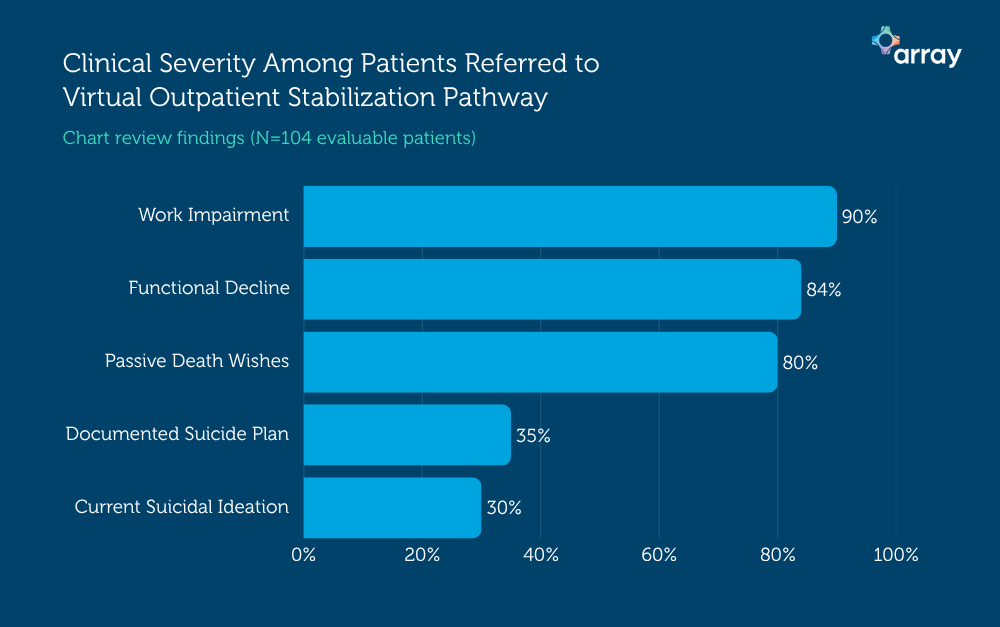
- 80% experienced passive death wishes
- 30% experienced current suicidal ideation
- 35% had a documented suicide plan
- More than half had a history of suicide attempt
- 90% experienced work impairment
- 84% demonstrated evidence of functional decline
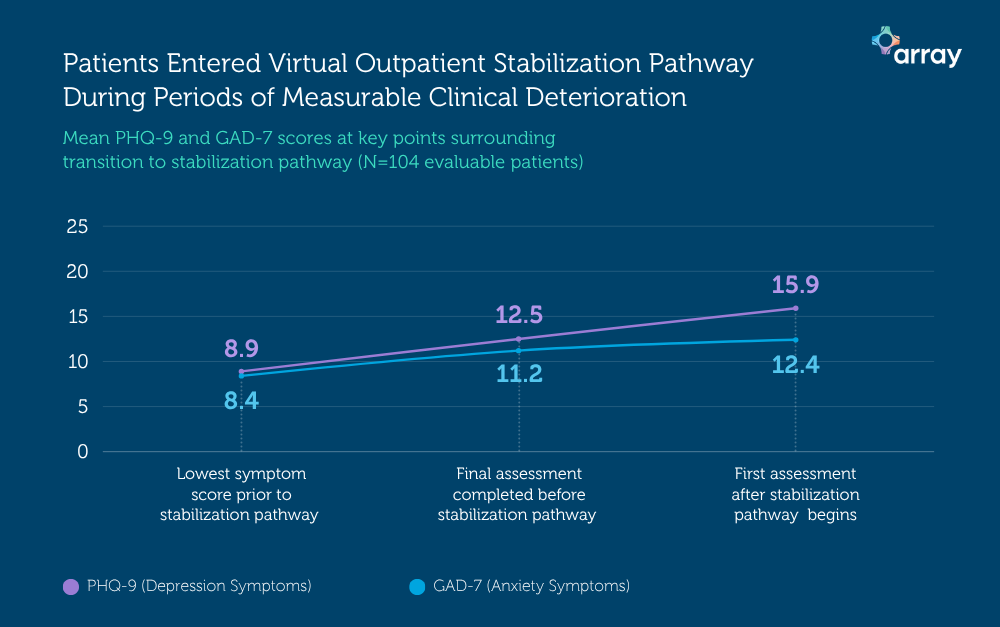
Available symptom data demonstrated measurable deterioration before patients entered the acute stabilization pathway. Among patients with available PHQ-9 assessments, average scores increased from 8.9 to 12.5 immediately before pathway assignment and then to 15.9 at the beginning of pathway participation. GAD-7 scores followed a similar pattern.
The charts described a population facing severe depression and anxiety, panic symptoms, suicidality, trauma-related symptoms, substance use, grief, relationship crises, occupational impairment, financial stress, medical comorbidity, and substantial declines in everyday functioning.
What Happened Next?
Patients Received Intensive, Coordinated Support
Across the 104-patient cohort, patients completed 793 pathway-designated encounters, including 542 therapy visits and 251 medication-management visits. Patients completed a mean of 7.6 pathway encounters, although support varied considerably according to clinical need.
Importantly, these were not isolated crisis encounters. Across the broader treatment period, the cohort completed 3,396 behavioral health encounters, averaging 32.7 encounters per patient, with a median of 24 encounters. Patients completed 2,313 therapy visits and 1,083 medication-management visits, reflecting substantial engagement before, during, and after stabilization.
Among reviewed patient charts:
- 95% received care coordination
- 95% had a documented medication change
- 95% had a documented safety plan
The pathway functioned not as a stand-alone crisis program, but as an intensification layer embedded within an existing outpatient continuum of care.
Symptoms Improved
Among patients with available symptom data, peak PHQ-9 scores averaged 18.1 before declining to 11.8 at final assessment. Peak GAD-7 scores averaged 15.5 before declining to 11.0. These findings suggest that many patients experienced substantial worsening before entering the acute stabilization pathway followed by meaningful improvement during stabilization.
Most Patients Returned to Lower-Acuity Care
One of the most important questions for any stabilization pathway is whether patients eventually return to lower-acuity treatment.
The answer was generally yes.
Nearly two-thirds of patients had an observed lower-pathway encounter after their final stabilization encounter. Chart review findings provided even stronger evidence:
- 78% had a documented pathway step-down
- 100% had documented follow-up arrangements
For most patients, the acute phase was followed not by discharge from behavioral healthcare but by movement into a lower-acuity and more sustainable level of outpatient treatment. Symptom improvements also appeared to persist after stabilization ended, with continued improvement in both PHQ-9 and GAD-7 scores during follow-up.
Together, these findings suggest that the pathway functioned as intended: a temporary stabilization mechanism that helped patients safely navigate periods of acute deterioration and reconnect with ongoing outpatient care, while allowing clinical gains achieved during stabilization to continue after the crisis had passed.
Reported Emergency Department Utilization Declined
One way to evaluate an outpatient stabilization pathway is to examine crisis utilization before and after the period of increased support.5
In the 90 days before pathway participation, 27.9% of patients reported emergency department utilization. In the 90 days afterward, that proportion fell to 4.8%, representing an 83% reduction in reported utilization. Similar improvements were observed across other observation windows.
These findings are particularly notable given the acuity of the population. Despite severe symptoms, elevated suicide risk, impairment, and functional decline, most patients transitioned successfully back to lower-acuity care and demonstrated symptom improvement with relatively low rates of reported crisis utilization following stabilization.
The Opportunity: Building More Responsive Outpatient Care
Behavioral healthcare has invested heavily in defining levels of care. It has invested less consistently in developing reliable mechanisms for helping patients move between levels of need while preserving continuity.
Many episodes of acute psychiatric deterioration occur among patients who are already engaged in outpatient treatment. The findings from this analysis suggest another possibility. Rather than immediately transferring those patients to another organization or level of care, outpatient programs may be able to respond through rapid intensification of treatment, structured risk monitoring, care coordination, and proactive follow-up.
In this cohort of 104 patients, the acute stabilization pathway functioned as a bridge through deterioration rather than a pathway out of care. Patients remained connected to treatment, received intensive support, demonstrated improvement in depression and anxiety symptoms, and most ultimately transitioned back to lower-acuity care. Reported emergency department utilization also declined substantially following stabilization.
The lesson is not that every patient can be managed in an outpatient setting. The lesson is that outpatient care may be capable of more than we traditionally expect when organizations can identify deterioration early, adjust treatment intensity appropriately, and preserve continuity throughout the patient journey.
The opportunity is not simply to create another level of care.
It is to build a continuum that can change with the patient.
References
- Atagün M. İ. (2025). Longitudinal trajectories of major depressive disorder provide further clinical perspectives for precision psychiatry. PCN reports : psychiatry and clinical neurosciences, 4(4), e70221. https://doi.org/10.1002/pcn5.70221
- Panaite, V., Rottenberg, J., & Bylsma, L. M. (2020). Daily Affective Dynamics Predict Depression Symptom Trajectories Among Adults with Major and Minor Depression. Affective science, 1(3), 186–198. https://doi.org/10.1007/s42761-020-00014-w
- Davis, A., Smith, T., Talbot, J., Eldridge, C., & Betts, D. (2020). Predicting patient engagement in IAPT services: a statistical analysis of electronic health records. Evidence-based mental health, 23(1), 8–14. https://doi.org/10.1136/ebmental-2019-300133
- Vigod, S. N., Kurdyak, P. A., Dennis, C.-L., Leszcz, T., Taylor, V. H., Blumberger, D. M., & Seitz, D. P. (2013). Transitional interventions to reduce early psychiatric readmissions in adults: Systematic review. British Journal of Psychiatry, 202(3), 187–194. https://doi.org/10.1192/bjp.bp.112.115030
- Lee, S., Herrin, J., Bobo, W. V., Johnson, R., Sangaralingham, L. R., & Campbell, R. L. (2017). Predictors of return visits among insured emergency department mental health and substance abuse patients, 2005-2013. The Western Journal of Emergency Medicine, 18(5), 884-893. https://doi.org/10.5811/westjem.2017.6.33850